01 What we need to start
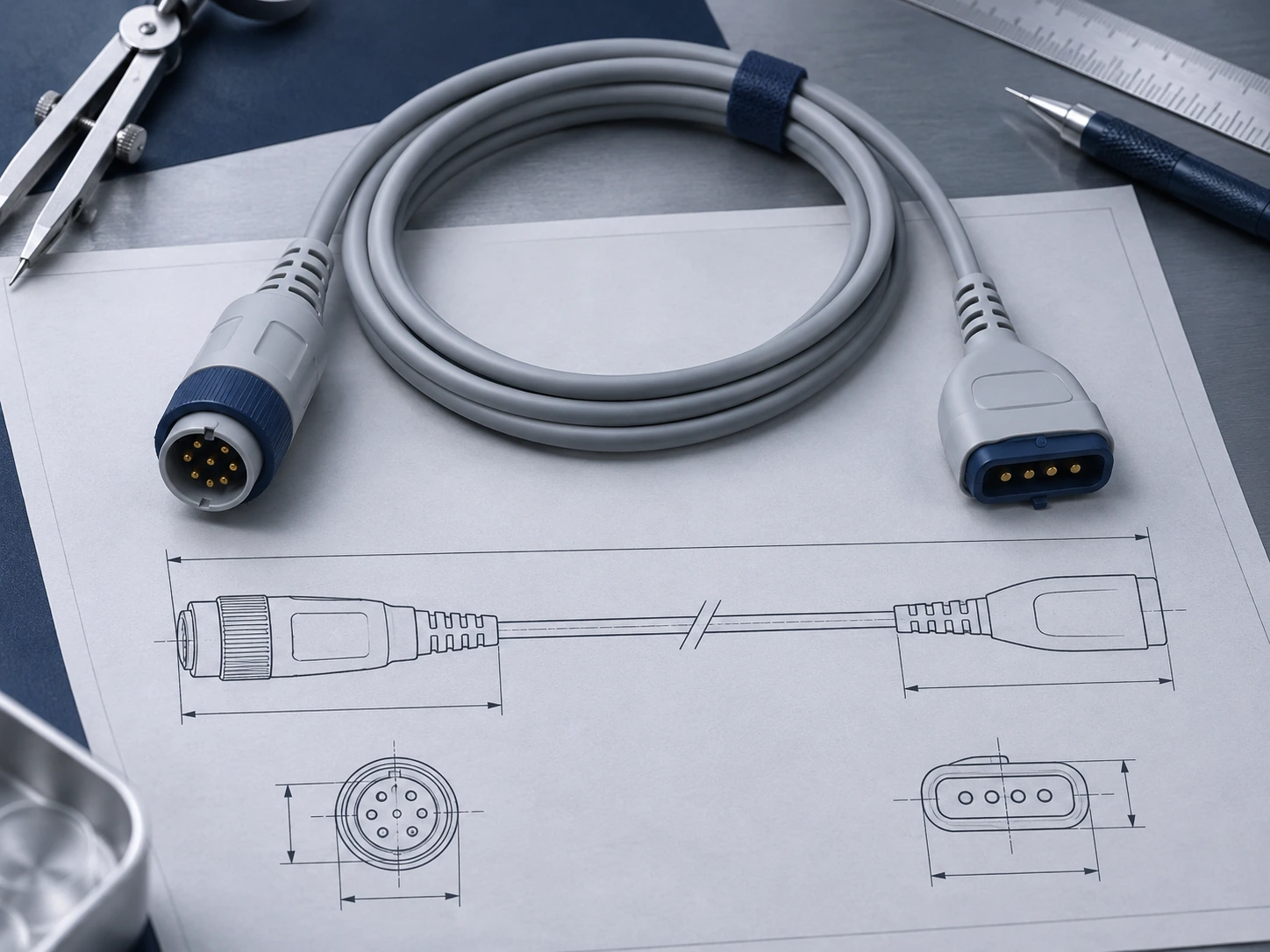
- A drawing, a specification or a physical sample.
- Connector part numbers and pin assignment.
- Cable construction — conductor count, gauge, insulation and shielding.
- Length, tolerance and labeling requirements.
- Packaging and any sterilization or cleaning constraints.
A hand sketch with dimensions is enough to start a conversation. We will confirm the rest during technical review.
02 Decisions we work through together
These are the choices that most often determine whether an assembly survives clinical use. We bring the manufacturing consequence of each option; the application requirement stays with you.
- Gauge versus flexibility — signal integrity and current capacity against bend life.
- Shielding strategy — braid, foil or combination, and where the shield is terminated.
- Strain relief — overmold, boot or heat-shrink, and how much flex is left at the connector.
- Termination — crimp, solder or welding, driven by wire gauge and current.
- Identification — laser marking, labels or color coding, and where they must survive.
03 Where we say no
If a design falls outside the processes we actually run, we say so during review rather than quoting and discovering it later. That includes assemblies that depend on cleanroom molding, in-house sterilization or clinical validation — those are not part of our current scope.
04 Samples and iterations
Prototype quantities are quoted separately from production. Each iteration is built to a defined revision so that changes between samples stay traceable.
Sample lead time is confirmed per project and is not published here as a standing commitment.